SWITCH — CBG infrastructure | designjojo
SWITCHproject case study/00
circular fuel service / Bengaluru

turning kitchen waste into kitchen fuel.

Hotels pay twice: once to get rid of food waste, and again to buy gas to cook. SWITCH collects the waste every day, turns it into compressed biogas (CBG), and delivers it back to the same kitchens at a fixed price.

SWITCHThe
Sustainability
Reserve
/role

Founder and project lead. Research, service design, product design, brand, business model.

/timeline

Grapp concept, then SWITCH. IHCL feasibility study 2023–24. Proposal 2025. Model revised Oct 2026.

/partners

IHCL (Taj, Bengaluru) for the study. Plant costing from GEON Engineers.

/status

Pre-pilot. IHCL interested; proposal sent to the Tata ecosystem.

SWITCHthe anchor client in numbers/01
49.5t/mo
01//organic waste
five Taj kitchens
23.8t/mo
02//LPG burned
same five kitchens
1.37₹ Cr/yr
03//what Taj saves
with SWITCH

two bills, one building.

Waste and LPG volumes are from my 2023–24 feasibility study with IHCL. Savings are modelled at October 2026 prices: fuel plus avoided disposal fees.

SWITCHorigins/02
where it began / Kochi, Kerala

it started with a burning landfill in my home town.

I grew up in Kochi, a green city with a bad waste problem. In March 2023 the Brahmapuram waste plant caught fire and the city lived under smoke for days.

Years earlier, a Discovery Channel episode on how European cities treat waste had stuck with me. As a kid I drew my own version: a car refuelling from a tank, fed by a biogas plant buried under the ground, fed by waste. SWITCH runs on the same idea.
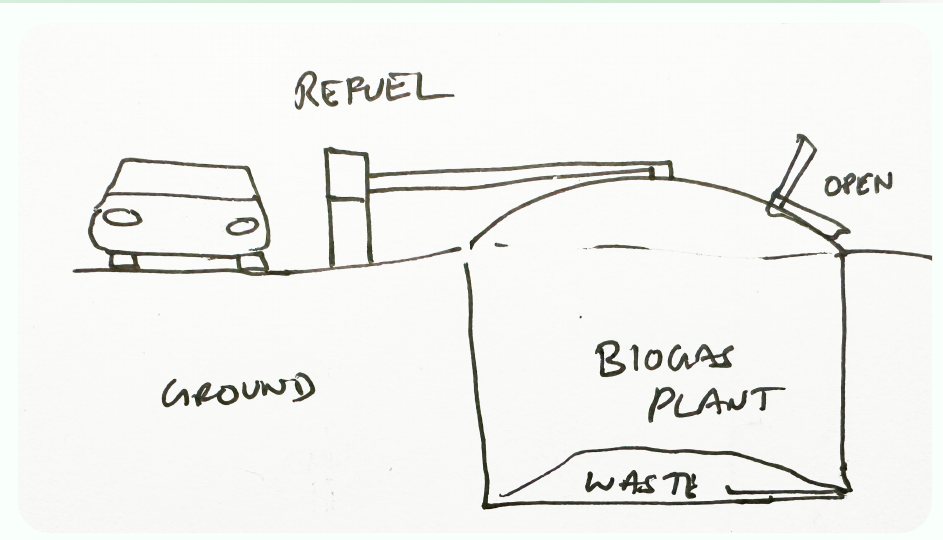
Childhood pencil sketch: a car refuels from a tank connected to an underground biogas plant fed by waste.
My childhood sketch of a biogas plant fuelling a car.
The Hindu · Kochi · March 2023

Brahmapuram fire | Kochi waste collection suspended

One of the clippings I kept over the years.

/the question

why does a city pay to burn the thing that could fuel it?

SWITCHfield research/03

four cities,
two broken systems.

I visited waste plants and operators in four cities, each chosen for what it could teach me.

benchmark
01

Indore

Ranked India’s cleanest city year after year. What does good look like?

technology
02

Bengaluru

Access to a working biogas plant.

the problem
03

Kochi

Home town, and known for its waste crisis.

industry
04

Pune

Waste companies and two leading biogas firms.

/system 01 waste

Institutions pay ₹10,000 to ₹60,000 a month to have waste taken away and get nothing back. Much of it is dumped, where it smells, burns and leaks methane.

/system 02 energy

The same institutions are squeezed by rising prices for cooking gas, vehicle fuel and power. CBG already replaces LPG and CNG, but at small scale.

Two systems bridged by CBG production: waste is collected and processed into CBG, which becomes fuel delivered back to the same institutions. /system 01 · waste /system 02 · energy Waste generated Collection Dumped at a plant Fuel Doorstep refuelling Cooking · transport · power CBG production /the bridge the same institutions make the waste and burn the fuel
Story stitching, redrawn: CBG production as the bridge between two systems that already work on their own.
SWITCHversion one · grapp/04
first answer / consumer app

an app that let you pay with waste.

Grapp let anyone book a waste pickup. The app weighed and priced it, and 30–50% of what you paid came back as credits to spend on CBG or manure in the same app. People don’t throw away things that have value.
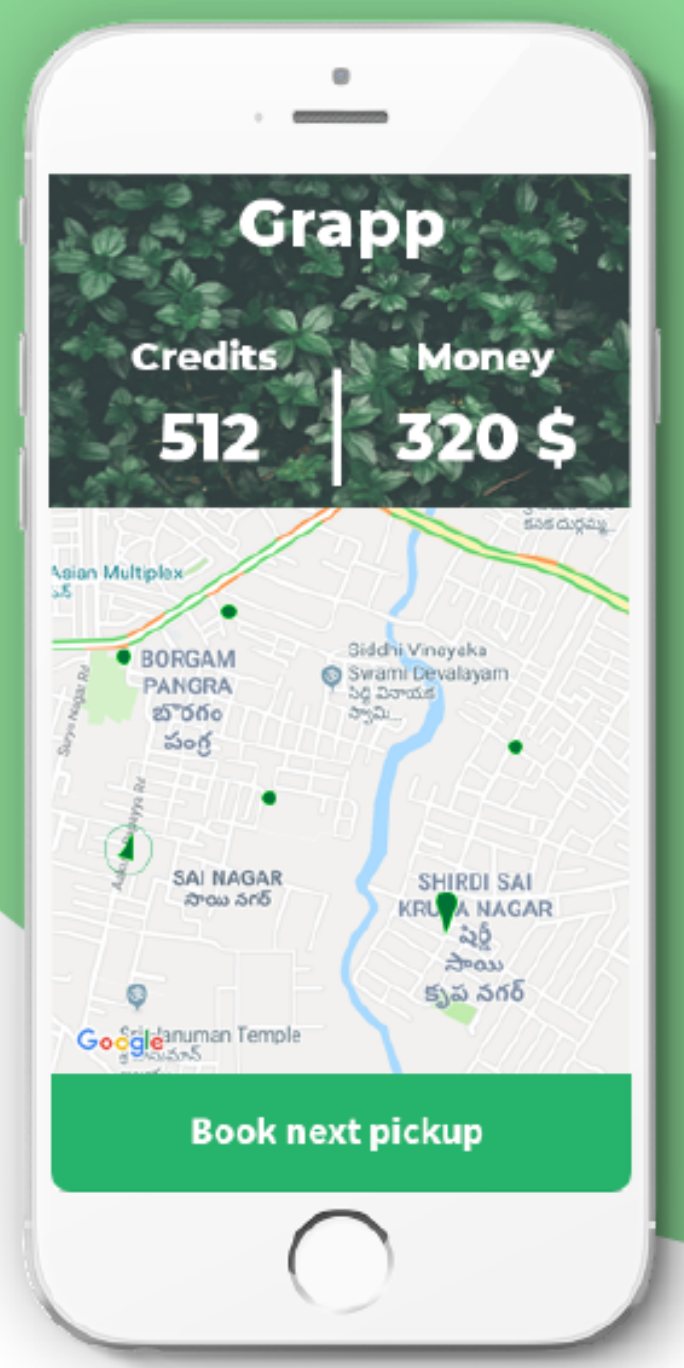
Grapp app home screen showing credits, money and a map with a Book next pickup button.
Grapp home: credits, balance, next pickup.
Grapp circular economy: waste, collection on subscription, biogas production, gas delivery, cooking, and back to waste. Slurry becomes manure. circular economy Waste Collectionsubscription · credits Biogas production Gas delivery Cooking Slurry → manure
The Grapp loop, redrawn. Lime marks where money changes hands.
Grapp pickup task flow: home, pickup, location, waste type, sorted with contents and weight or unsorted with weight, price estimate, request pickup, pick a time, confirm, repeat weekly with selected days, booked. /task flow · book a pickup Home Pickup Location Waste type Sorted Unsorted Contents + kg Weight (kg) Price estimate Request pickup Pick a time Confirm? Repeat? Select days Booked yes yes no · one-time pickup no · cancel
Pickup task flow, redrawn. A saved daily pickup skips straight to the price estimate.
Home
Pickup
01 home
Location
J.P. Nagar
Next
02 location
Type
Sorted
Unsorted
Next
03 waste type
Contents
Paper
Plastic
Food
Metal
Glass
Next
04 contents
Weight
12 kg
−    +
Next
05 weight
Estimate
₹60
Request
06 price
Time
Confirm
07 time
Repeat
Mon
Tue
Wed
Thu
Fri
Save
08 repeat
Booking wireframes, redrawn in the SWITCH palette.
/why it changed
01

households are too small

A home makes a few hundred grams of food waste a day. Thousands of pickups would feed one plant.

02

institutions already segregate

Hotels, campuses and caterers separate wet waste. Clean feedstock is what a digester needs.

03

the same buyer burns the gas

An institution that makes tonnes of waste also burns tonnes of LPG. One customer, both ends of the loop.

v1 · Grapp, pay with wastepilot concept · a college mess with 20–30 LPG cylindersv2 · SWITCH, fuel as a service
SWITCHfeasibility · IHCL/05
2023–24 / five Taj properties

inside five Taj kitchens.

With IHCL’s permission I studied Taj Bangalore, Taj MG Road, Taj West End, Taj Yeshwantpur and Vivanta Residency Road: kitchens, waste yards, engineering teams and a year of waste and fuel data.

/finding 01

the waste leaves with no return

Wet waste went to piggeries or municipal pickup. It cost money and came back as nothing.

/finding 02

engineers don’t want another machine

Some sites had in-house digesters. The engineers did not find them efficient or useful.

/finding 03

piped gas already works here

Taj Whitefield cooks on PNG, the same gas as CBG. No new burners, no new habits.

/finding 04

volatility hurts more than price

LPG is repriced monthly. A fixed yearly price is easier to budget.

SWITCHthe reframe/06

Taj can’t feed a plant. Taj can buy from one.

3%
of the plant’s feedstock comes from Taj
34%
of the plant’s gas is bought by Taj

A plant that makes kitchen-grade CBG economically needs about 60 tonnes of feedstock a day. Five Taj properties supply about 1.65 of those tonnes. So Taj is the anchor buyer, not the feedstock: waste comes from across the city, guaranteed offtake comes from the hotels.

SWITCHthe plant/07

60 tonnes in.
2.7 tonnes of gas out.

Steady-state daily averages from the model: 60 TPD design at 90% availability, 330 operating days, a conservative 50 kg of CBG per tonne.

About 54 tonnes a day of feedstock (36 kitchen waste including 1.5 from Taj, 12.6 market waste, 5.4 Napier grass) is digested into 2.7 tonnes of CBG and 9.2 tonnes of manure. CBG split: 0.91 to Taj, 0.45 to other hotels, 1.33 to oil companies. /feedstock · t per day Kitchen waste 36.0 hotels, restaurants, campuses of which Taj: 1.5 (2.75%) Market waste 12.6 vegetable mandis Super Napier 5.4 10% grass steadies the mix /plant · 60 TPD design Anaerobic digestion 54 t/day in 90% availability 50 kg CBG per tonne biogas Upgrade + compress to ≥95% methane digestate Organic manure 9.2 FOM, sold to farms /CBG out · 2.7 t per day Taj kitchens 0.91 replaces all 5 sites’ LPG Other hotels 0.45 4–6 kitchens by year 3 Oil companies 1.33 SATAT offtake, ₹77.4/kg line weight = share of CBG
Taj waste is collected free as part of its fuel contract; other bulk generators pay a gate fee.
SWITCHservice design/08
one contract / two jobs

easier than booking a cab.

Engineers didn’t want equipment, so SWITCH is a service the hotel subscribes to once. Wet waste goes out every day and the gas tanks never run dry. The manager stops thinking about either.

01

subscribe

A CBG skid is installed and one burner line moves to CBG for a trial month. Price fixed for the year.

02

daily pickup

Segregated wet waste collected on a fixed slot, weighed and logged.

03

waste becomes fuel

Digestion, upgrading, compression. Manure bagged as a second product.

04

automatic refill

Tank sensors report levels; a truck is sent before the minimum is reached.

Refill system: sensors on hotel tanks, fleet vehicles and gensets report low levels to a dispatch server, which sends the nearest refill truck from the plant. The trucks run on the same CBG. CBG plant + trucks trucks run on the same CBG Dispatch server Hotel kitchens IoT · storage skid Fleet IoT · cabs, staff buses Gensets IoT · backup power 1 2 3 nearest truck refills before run-out
The refill system, redrawn: 1 a sensor reports a low tank, 2 the server dispatches, 3 the nearest truck refills. The same loop serves cabs, buses and gensets.
/layeronboardingdaily pickupprocessingrefillmonth end
Hotel staffGM signs; engineering approves skid locationStewards segregate into green binsNothing to doNothing to do; the kitchen keeps cookingOne invoice and an ESG report
SWITCH front stageSite survey, skid install, burner trialDriver collects, weighs, scans bin tagTonnes processed on dashboardCrew swaps cascade or tops up skidReview of savings and CO₂
line of visibility
SWITCH back stagePrice set from LPG indexRoutes across all bulk generatorsFeed mix balanced; gas quality testedDispatch from tank forecastWaste in vs gas out reconciled
SystemsCRM, site recordWeighbridge, bin RFID, GPSPlant SCADA, gas analyserTank sensors, schedulerBilling, ESG reports
Service blueprint. The hotel sees two moments: a bin that disappears and a tank that never runs out.
SWITCHproduct · SWITCH energy/09
a digital platform / for trust

the transparency dashboard.

A service the client never sees needs a way to earn trust. The hotel and SWITCH operations see the same data, so the invoice and the operations log always agree.
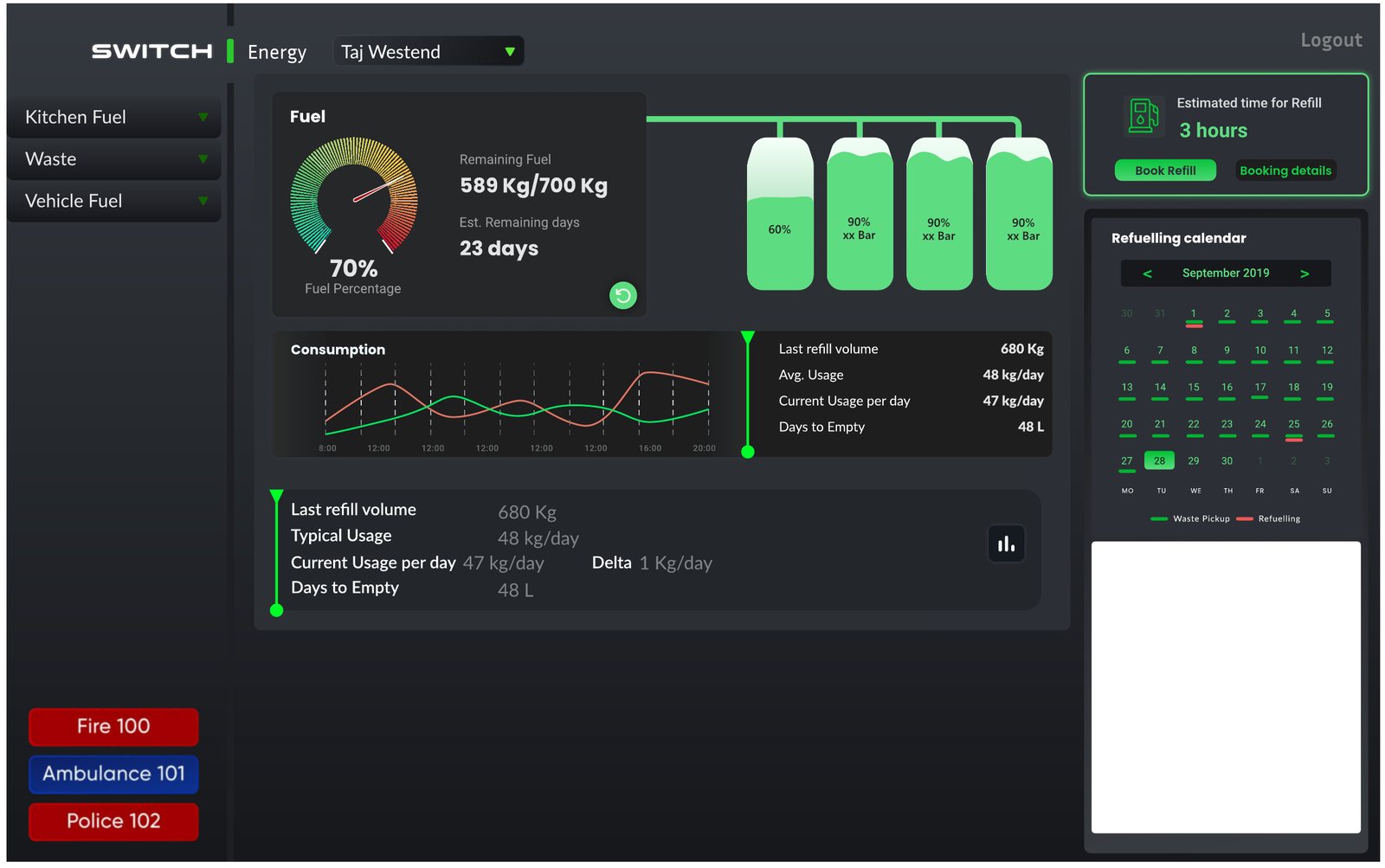
SWITCH Energy dashboard for Taj Westend: fuel gauge at 70% with 589 of 700 kg left and 23 days remaining, four tank levels, consumption chart, refill calendar and emergency contact buttons.
Hotel view for Taj Westend: fuel left, days to empty, tank levels, consumption, refill calendar.
/decision 01

lead with days to empty

Kitchen engineers think in run-out risk, not kilograms. The fuel card answers that first.

/decision 02

one service calendar

Pickups and refills share a calendar, and an extra refill is one tap away.

/decision 03

emergency numbers always on

Gas sits in a working kitchen. Fire, ambulance and police stay pinned.

SWITCHbrand/10
identity / system

a name for the moment of change.

The name is the action I was asking hotels to take: switch the fuel. The Sustainability Reserve frames the company as a reserve of recovered resources, not a waste contractor. The mark is a switch thrown.

SWITCHThe
Sustainability
Reserve
SWITCHThe
Sustainability
Reserve
SWITCH SWITCH SWITCH
SWITCHEnergy
SWITCHMobility
SWITCHRecycle
SWITCHResource
switch green
#2DBE45
lime
#B6E651
reserve forest
#0F2E26
graphite
#3B4146
mist
#F3F6F4
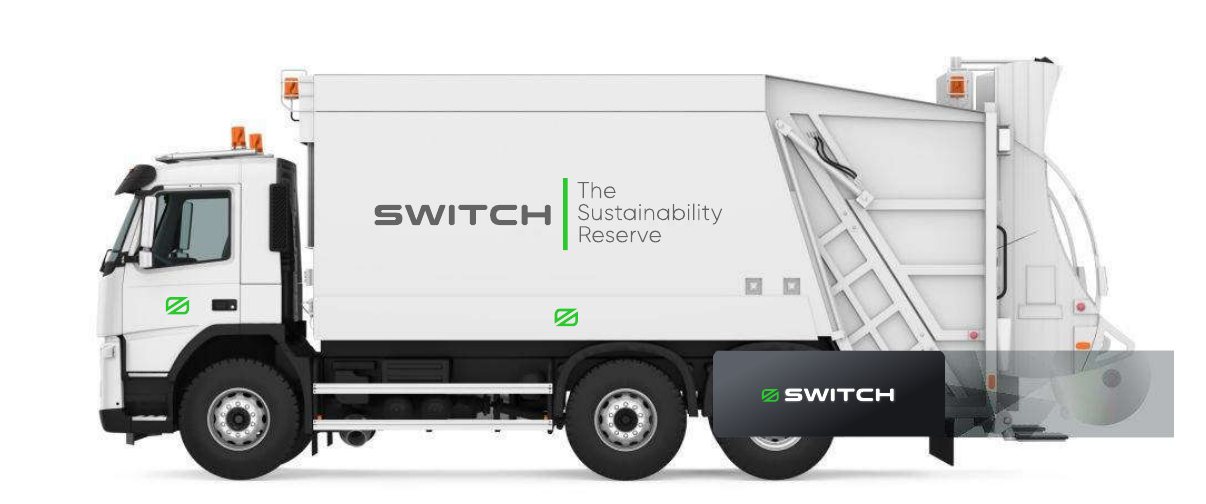
White collection truck with SWITCH The Sustainability Reserve livery.
Collection fleet livery.
SWITCHbusiness model/11
model revised / Oct 2026

four revenue lines, and one that makes it bankable.

A 60 TPD plant makes about 890 tonnes of CBG a year. Capex starts from a GEON Engineers quote of ₹16.35 Cr for a 2.5 TPD plant: I used ₹20 Cr for 3 TPD plus ₹4 Cr for the fleet, hotel skids and sensors.

24₹ Cr
capex//₹21.5 Cr after central
financial assistance
20%
IRR//project, 15 years,
after tax
4.7yrs
payback//with a two-year
ramp-up

year 3 revenue · ₹12.4 Cr

/full utilisation
hotel CBG at ₹123/kg, 15% below LPGoil companies at ₹77.4/kggate fee ₹2/kgmanure at ₹4,000/t
/what the model taught me

the plant is the cost. the service is the business.

A plant that only sells to oil companies at the SATAT price, with no gate fees, barely clears 3%. Hotel contracts and waste contracts lift it to 20%.

/what Taj gets · per year
todaywith SWITCH
Cooking fuel₹4.36 Cr₹3.70 Cr
Wet waste disposalup to ₹0.71 Cr₹0
Savingup to ₹1.37 Cr

Disposal at the city’s ₹12/kg cap.2 Fuel price fixed for the year.

/market · Bengaluru hotels
totaltarget
Large hotels20+10
Medium hotels300+50

Hotels first, then campuses, caterers and event venues.

SWITCHwhy now/12
policy / has caught up

city gas must now carry biogas.

Gas distribution companies must blend CBG into CNG and domestic PNG.5 The SATAT purchase price rose to about ₹77.4/kg in June 2025.4 And 2026 rules allow CBG mobile refuelling units,6 which opens SWITCH Mobility: the truck that fills kitchen tanks can fill cabs, buses and gensets on the same stop.

/impact
17,800t/yr

organic waste kept from landfill

/impact
~2,700tCO₂e

avoided per year, at GAIL and BPCL plant benchmarks

/impact
~3,000t/yr

organic manure for farms

SWITCHroadmap · outcome/13

where it stands.

IHCL responded positively and showed interest in being the first customer. I packaged the work as a partnership proposal to the Tata ecosystem: IHCL as anchor customer, Tata Cleantech Capital as financier, CEIIC for R&D and IoT validation.

0–6 months
01

pilot

Letter of intent with Taj. One burner line per property on CBG. Validate savings.

6–12 months
02

build

₹24 Cr through CSR, Tata Cleantech Capital or Tata Trusts. Plant under construction.

12–24 months
03

scale

Plant running, more hotels, manure brand, first mobile refuelling routes.

/what I learned

follow the volume

Grapp was a good app for the wrong customer. Moving to institutions made the same idea workable.

design the business, not just the screens

The question that mattered was who pays and why. Answering it turned a machine into a service.

stress-test your own numbers

Rebuilding the model in 2026 corrected my earlier yield and emissions figures. A defensible number persuades better.

SWITCHsources/14

Taj waste and LPG volumes come from the 2023–24 IHCL study. Plant capex is anchored to a GEON Engineers quote. Prices, performance and financials are a model built on the public 2025–26 benchmarks below; they are estimates, not audited figures.

  1. Bengaluru waste: Deccan Herald; bulk generators: Citizen Matters.
  2. BSWML ₹12/kg cap: Bioenergy Times, Aug 2026.
  3. Commercial LPG, Bengaluru, Oct 2026 (₹2,898 per 19 kg): Goodreturns.
  4. SATAT price ₹1,478/mmBtu (≈₹77.4/kg): iamrenew, IMARC Engineering.
  5. CBG Blending Obligation: MoPNG via Vikaspedia.
  6. Gas Cylinder (Third Amendment) Rules, 2026: Autocar Pro.
  7. Benchmarks: GAIL Ranchi; BPCL Yamunanagar; CFA rate: Power Line.
SWITCHJoseph Anthraper
Founder & project lead

anthraper.jo@gmail.com · designjojo.com