

Overview
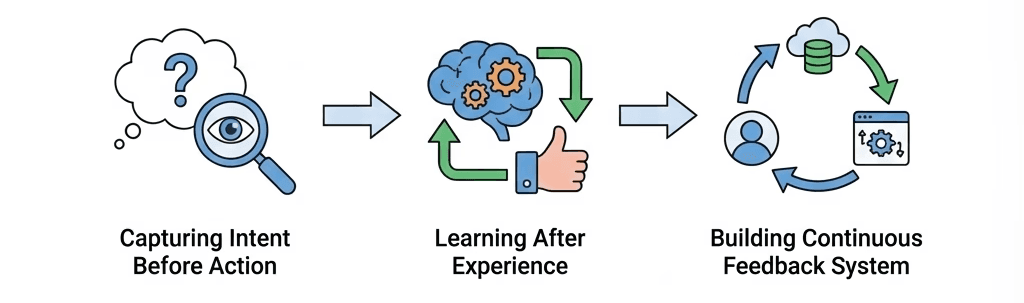
This project introduces Smart Research Notes, a lightweight system that captures user research during discovery and validates it post-stay, creating a powerful personalization loop.
Hotel booking platforms overwhelm users with endless options and lack emotional memory.
Users browse dozens of listings, revisit some and forget why they shortlisted or rejected others or they write it down manually.
Post-booking, platforms gather shallow reviews without context. Users coming back to review is almost non-existent unless they had a bad experience.
StaySense introduces a memory layer to the booking journey, capturing emotional reasons for decisions, reducing cognitive fatigue, and prompting meaningful feedback after the stay.

Hotel booking apps focus on:
Reviews
Ratings
Price comparison
They do not capture:
Why a user shortlisted a hotel
What expectations they had
Whether those expectations were met
As a result:
Platforms lose valuable intent data
Personalization remains shallow
Problem
Hotel booking apps don’t help users remember their decision-making. This leads to confusion, repeated browsing, forgotten preferences and poorly matched stays.
Goal
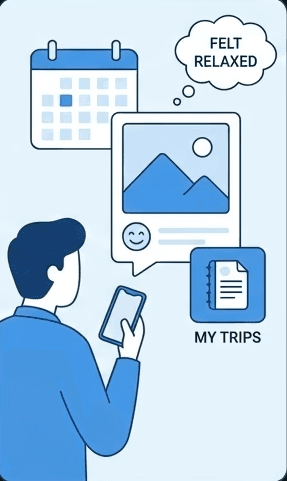
Reduce cognitive load during hotel discovery.
Help users track and recall their emotional decisions.
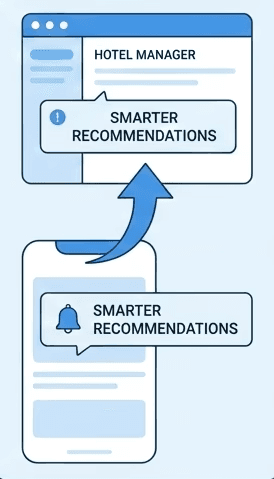
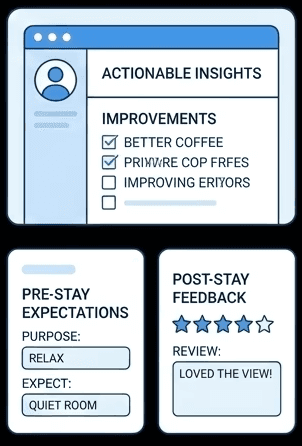
Create a feedback loop for better recommendations and actionable hotel improvements.
Capture intent and expectation before the stay, and feedback after.
Target Audience/Users
Anyone researching intensely before a travel, usually have their preferences and this is an untapped insight which can be used to cater to their travel plans ahead and therefore saving time.

The Explorers -Millennial and Gen Z users.
Experience-driven
Uses maps & street view
Cares about vibe and surroundings
The Planners-
Anyone who uses multiple tabs and OTAs to make booking decisions.
Research-heavy
Risk-averse
Wants certainty before booking

The research users do before a trip while planning is intensive and deep. The users often visit Google street view to check the neighborhood, aesthetics, etc. before booking.
This need of users is untapped behavioral data.
Users don’t just book hotels — they build a mental shortlist based on personal criteria like neighborhood vibe, walkability, noise levels, and nearby amenities.
These insights are:
Highly personal
Repeated across trips
Never captured structurally
Key Insights
User Journey
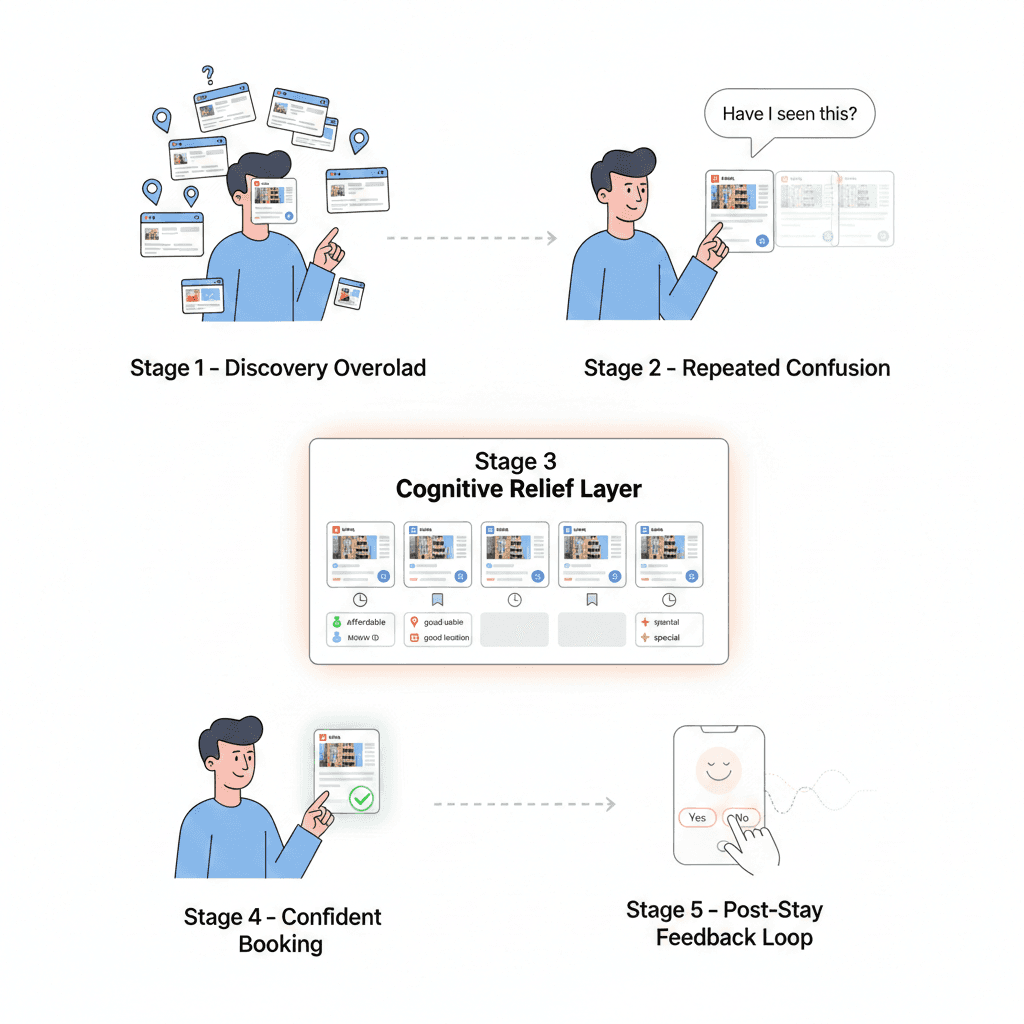
Stage 1 : Discovery Overload
Stage 2 : Repeated Confusion
Stage 5 : Feedback Loop
Stage 4 : Confident Booking
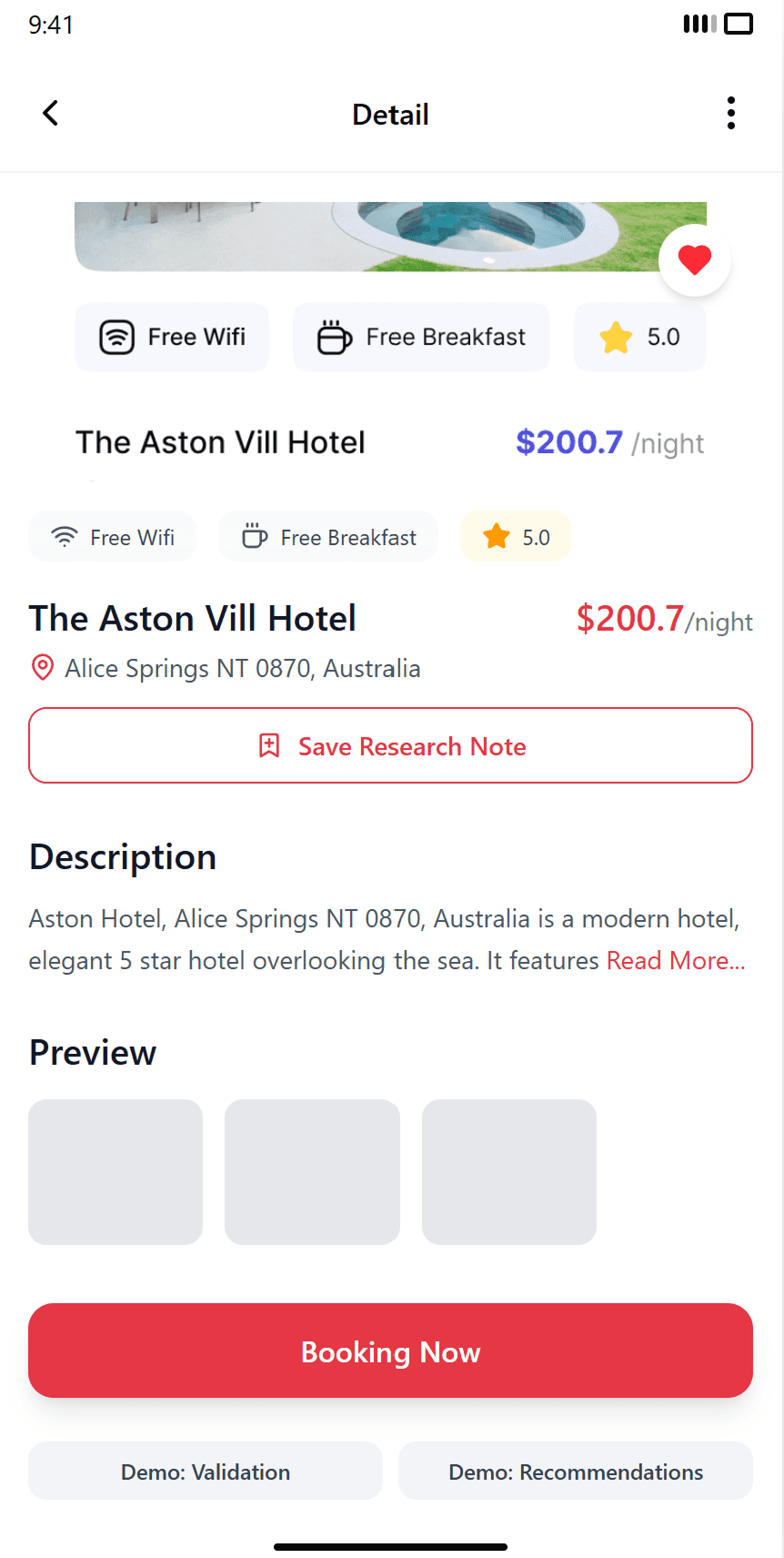
Smart Research Notes is a feature embedded into the hotel discovery flow that allows users to:
Save quick research notes while browsing
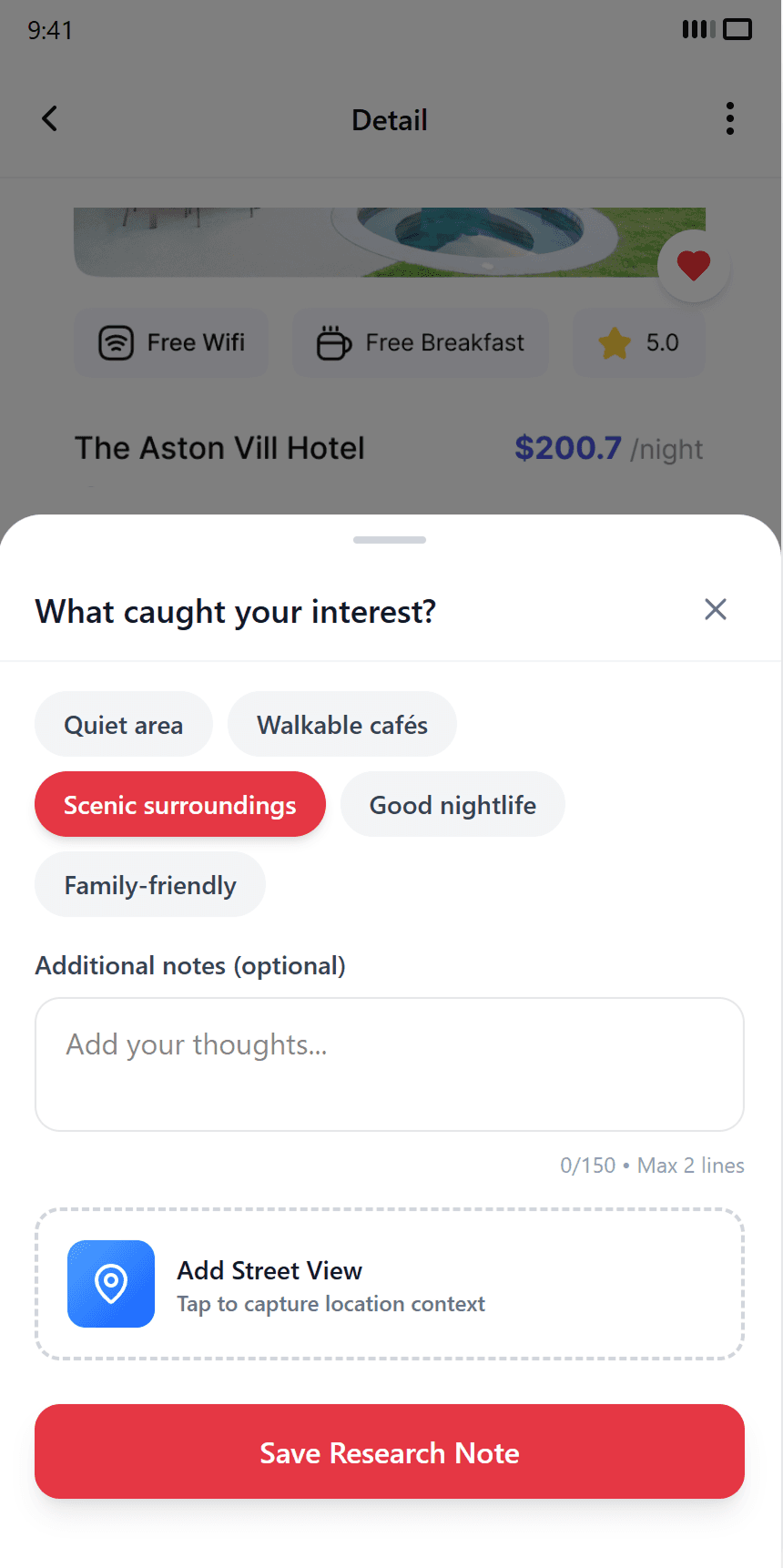
Tag reasons they find a hotel interesting
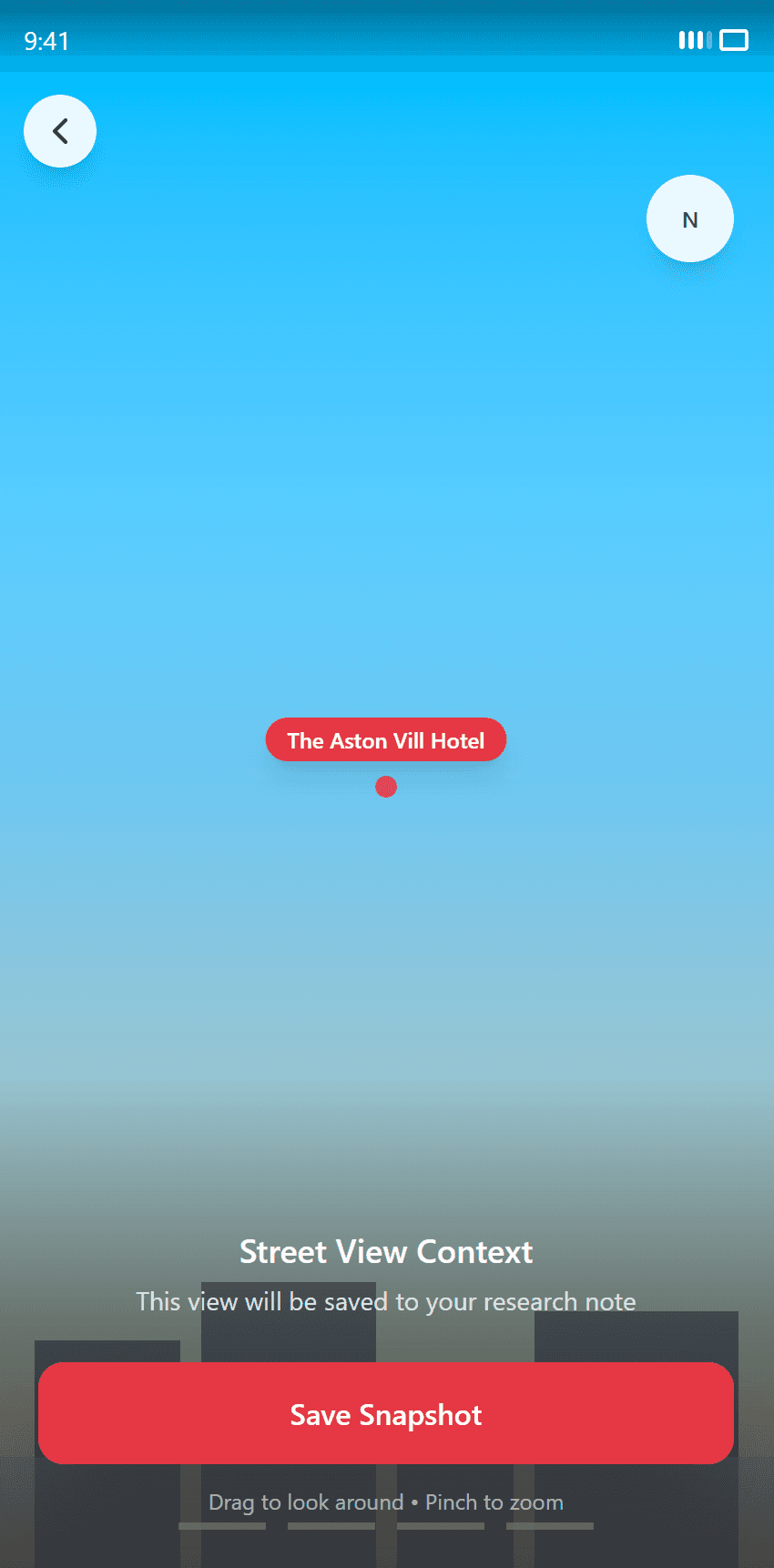
Capture visual context using Street View
Validate expectations after checkout
Receive smarter recommendations in the future
Solution
Add notes
Save Note
Street view
Quiet area
Cafe nearby
Family friendly
Transport nearby
Capturing Research in the Moment
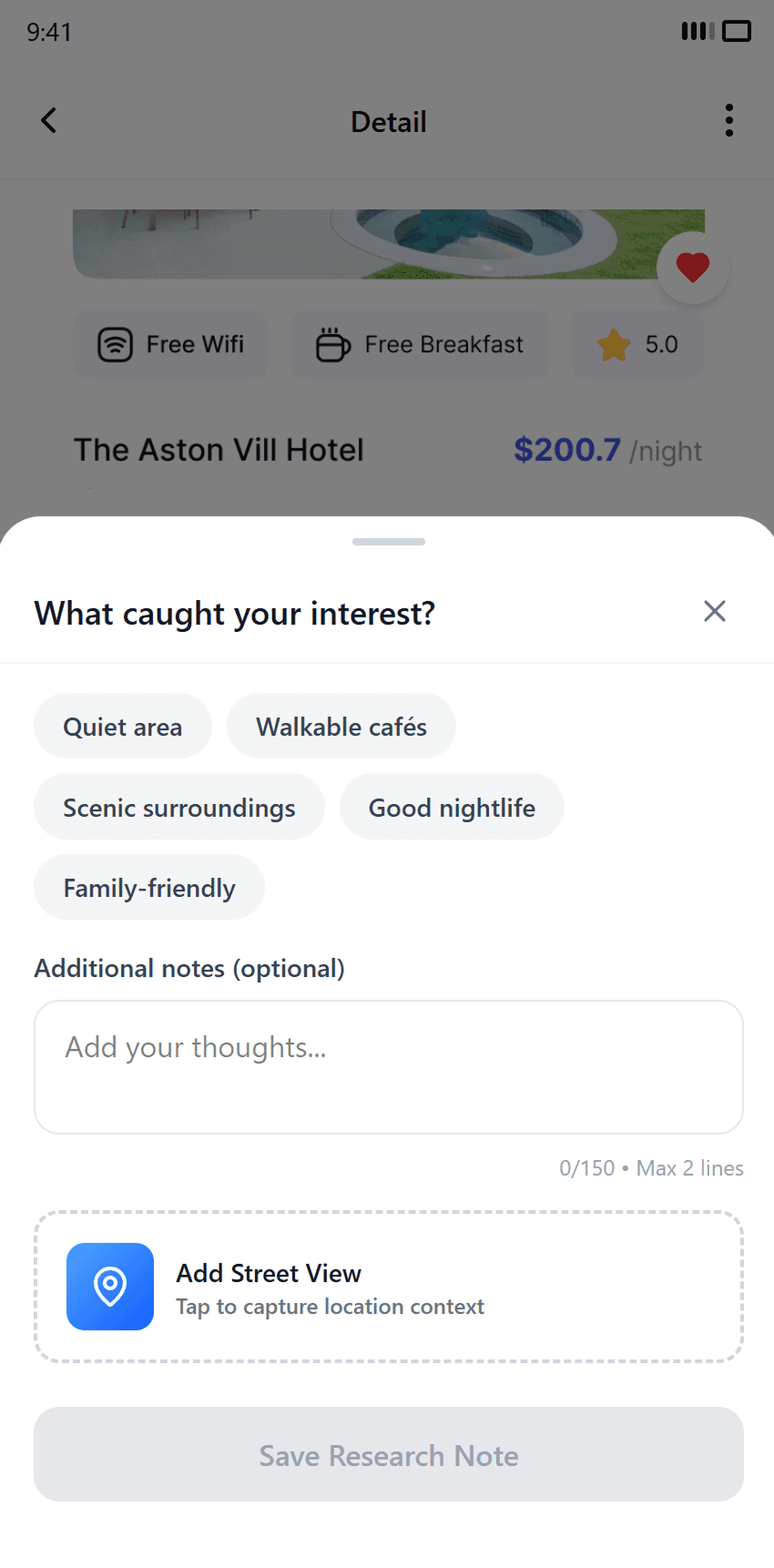
While browsing a hotel, users can:
Add a quick note
Select from predefined tags
Save Street View snapshots
Capturing Insights
Visual Context Capture
Street View as insight and clarity to make the decision.
Users often check Street View to understand:
Safety
Street vibe
Accessibility
With one tap, users can save a snapshot directly into their research notes — no screenshots, no clutter.
Tag examples
Quiet area
Walkable cafés
Scenic surroundings
Nightlife nearby
Family-friendly
These insights are:
Highly personal
Usually repeated across trips
Never captured structurally
Post-Stay Validation
Turning Feelings into Signals
After checkout, users receive simple yes/no questions based on their earlier research:
“Was the area quiet as expected?”
“Were cafés walkable?”
“Would you stay here again?”
Takes under 15 seconds and Produces high-quality, structured data.
Validating Insights
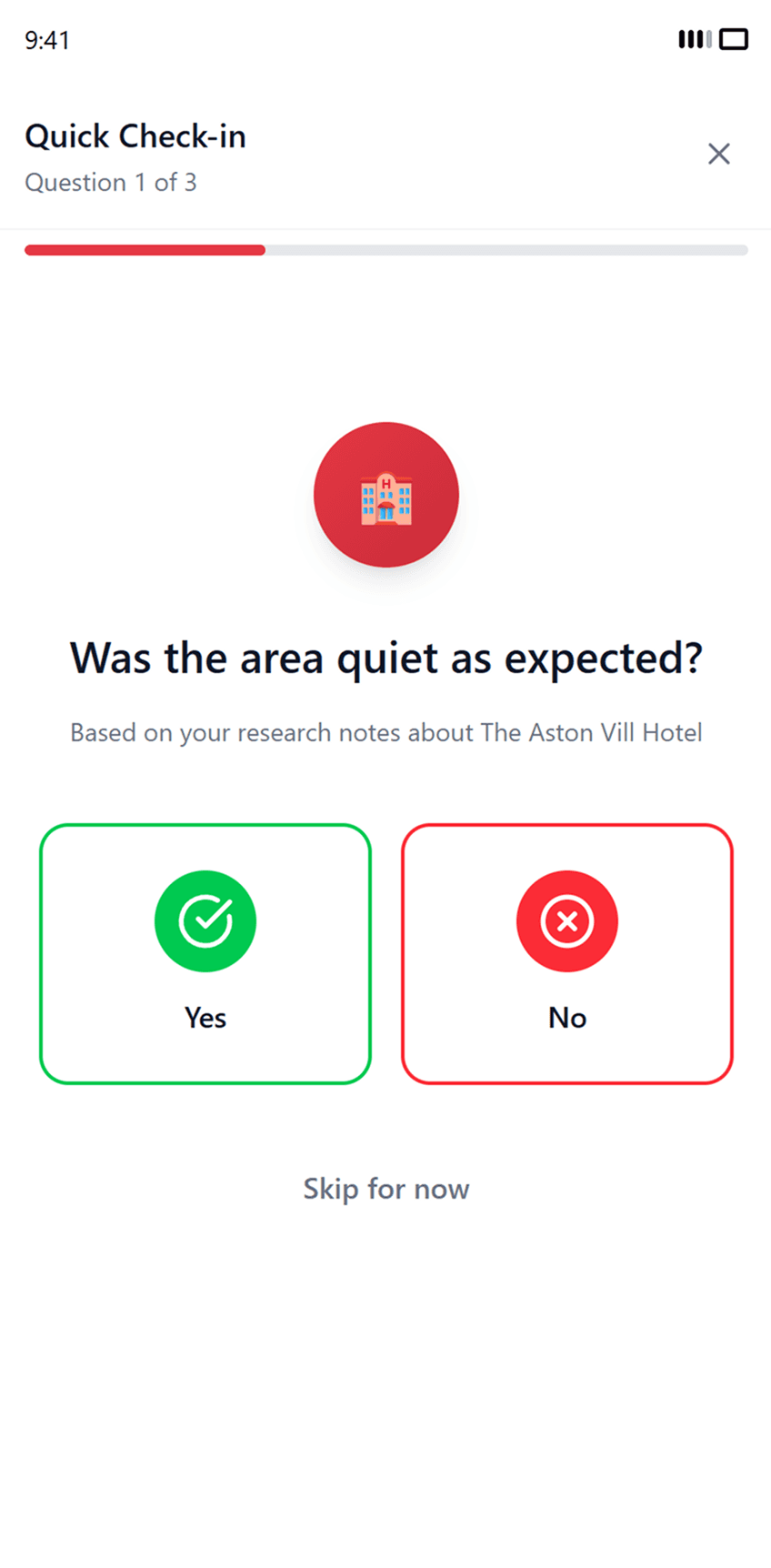
Why Yes / No Instead of Reviews?
Lower cognitive effort
Higher completion rate
Easier to compare and learn from
Binary answers transform subjective experiences into reliable signals for personalization.
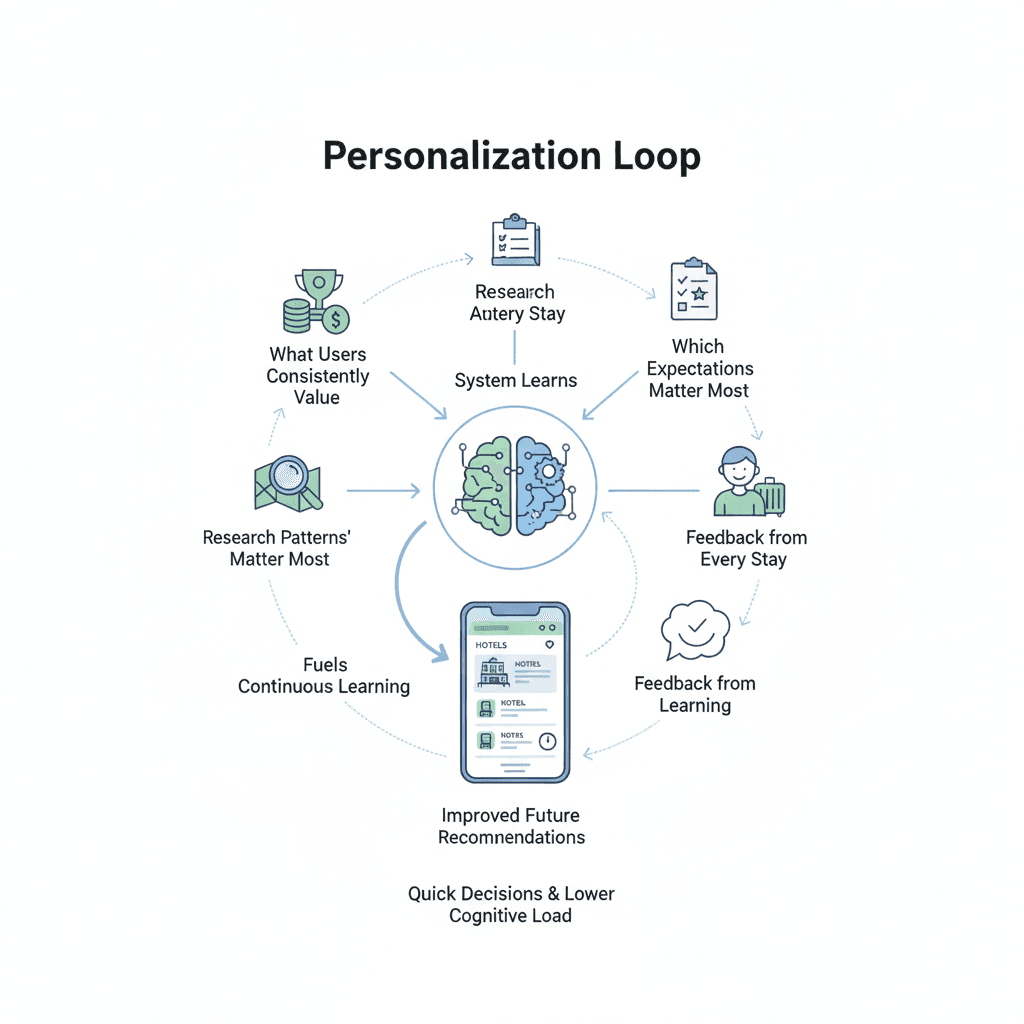
Personalization Loop
The system learns:
What users consistently value.
Which expectations matter most.
How accurate their research patterns are
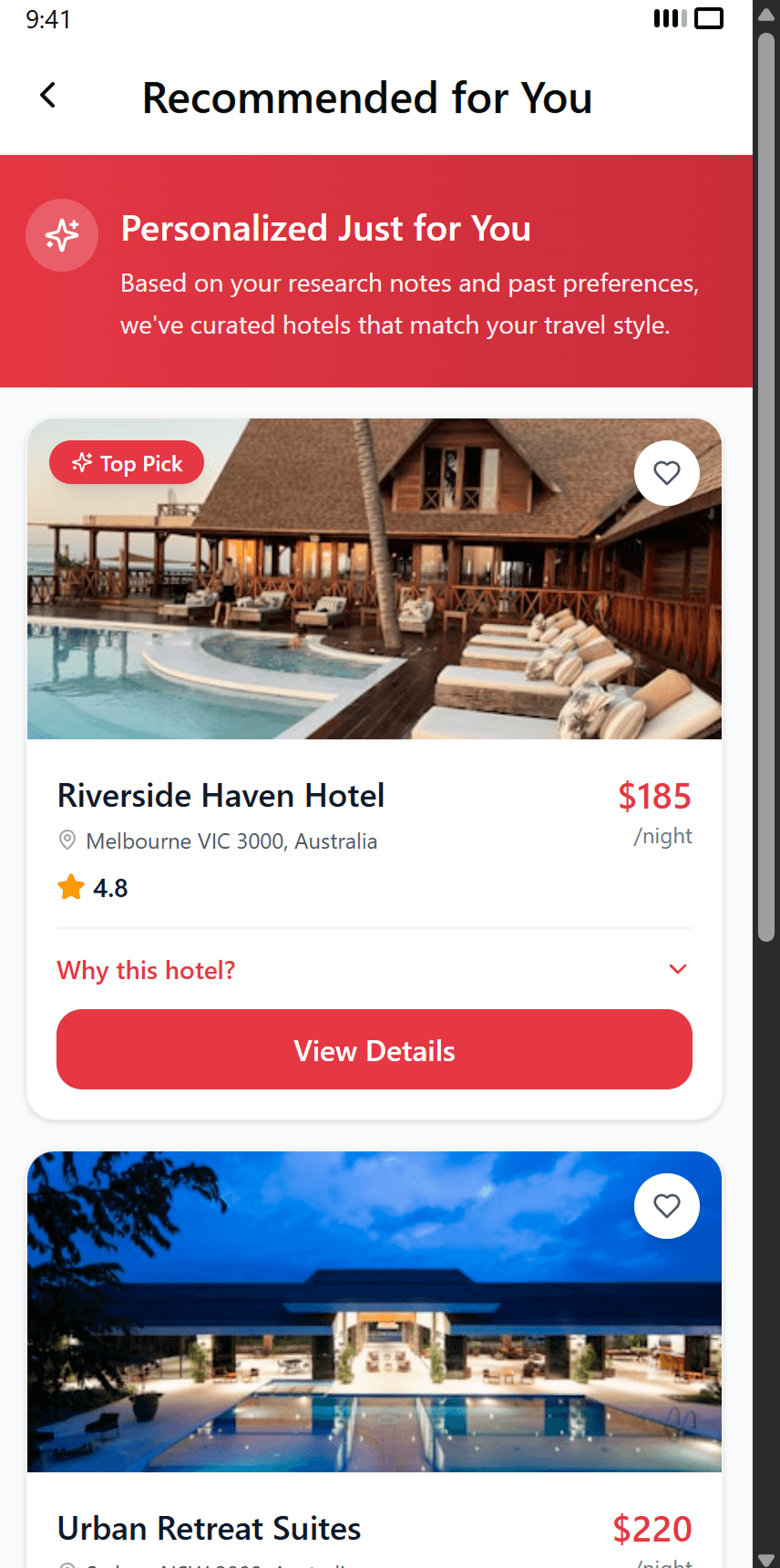
Future recommendations improve with every stay as the system learns and delivers what the user expects. This will help the user make quick decisions and lower their cognitive load.
Improving the Experience
This builds:
Trust
Transparency
Long-term loyalty
“Recommended because you consistently enjoyed quiet neighborhoods with walkable cafés.”
User Metrics
Research note adoption rate
Post-stay validation completion
Reduced booking anxiety
Success Metrics
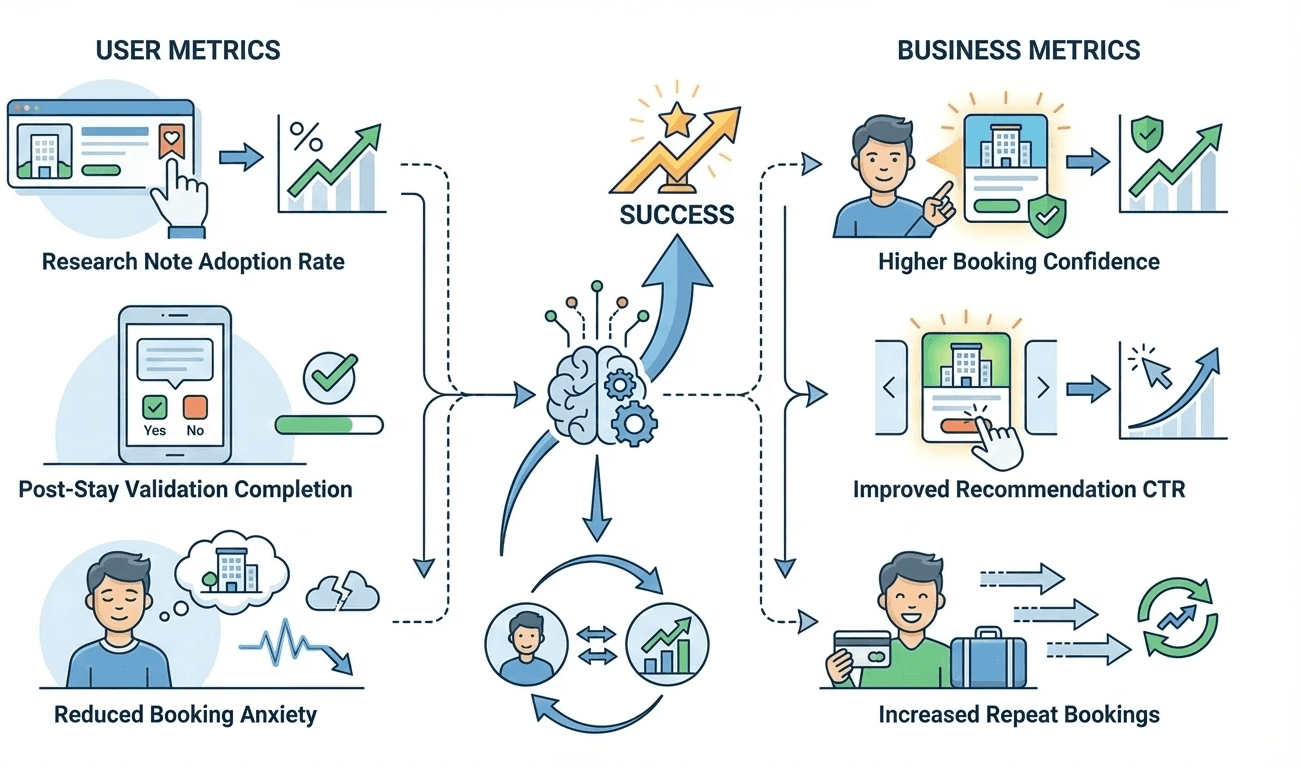
Business Metrics
Higher booking confidence
Improved recommendation CTR
Increased repeat bookings
Summary
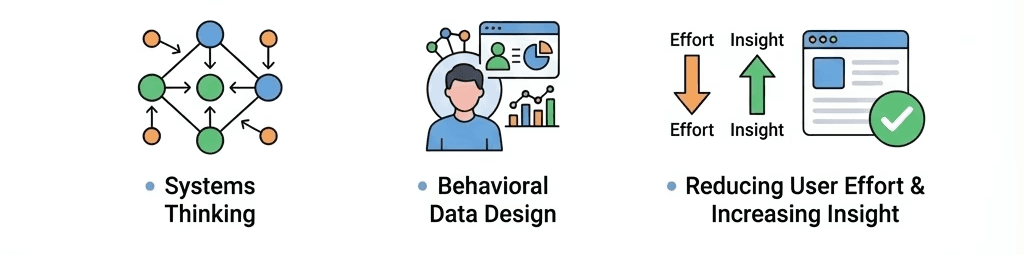
This project reframes hotel booking as an adaptive system rather than a one-time transaction.
Instead of optimizing only for conversion, the design captures user intent before action, learns from real experiences after the stay, and connects both through a continuous feedback loop.
By remembering why users shortlisted, rejected, or booked a property, the system reduces repeated cognitive effort and replaces guesswork with clarity.
Over time, this approach allows the platform to evolve with the user, shifting from static search results to context-aware, emotionally informed recommendations.